
NEWS
Manta Ray Tourism Generates More Than USD 300 Million Annually for the Maldives, Study Finds
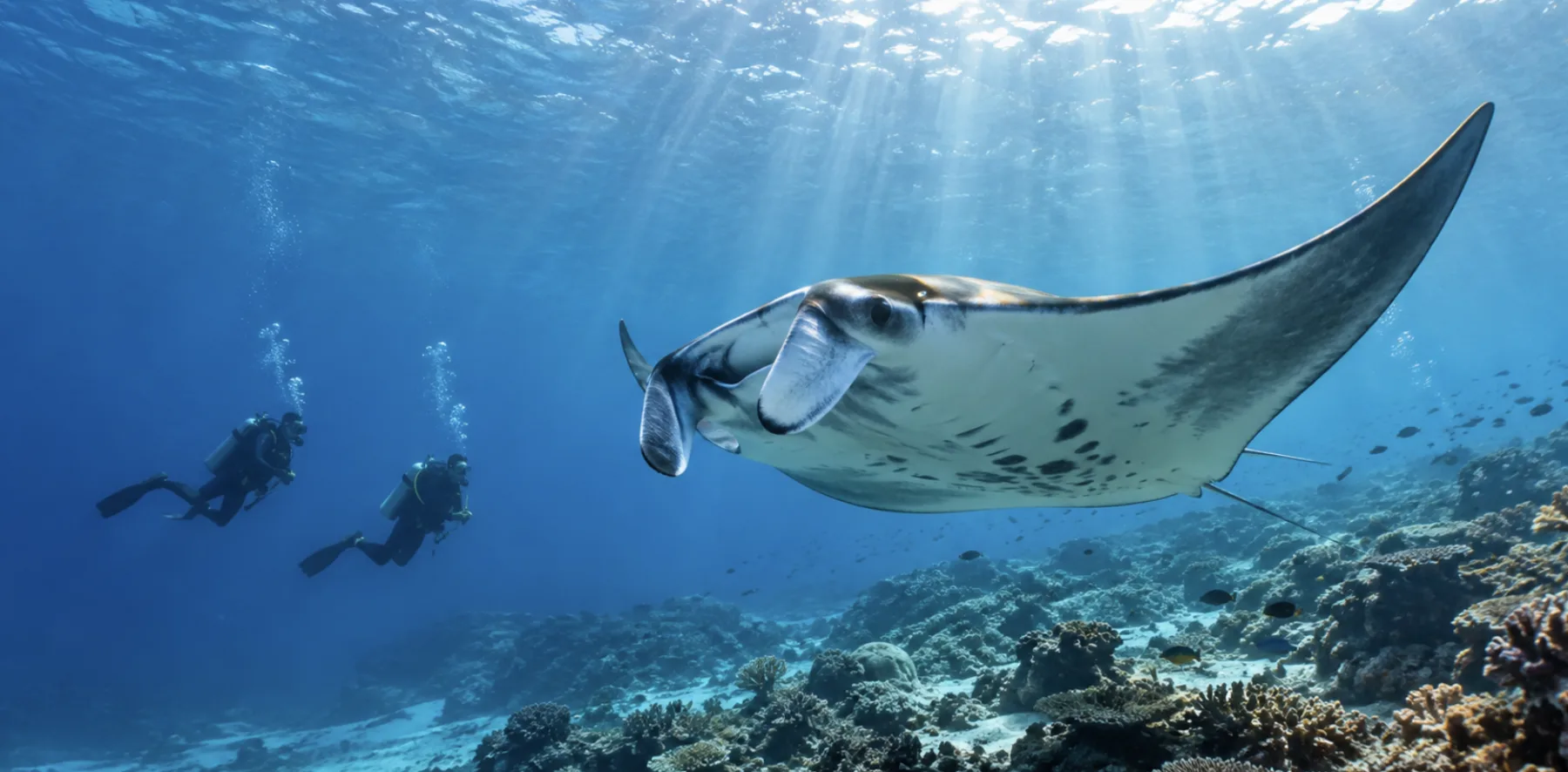
The research, titled “Valuing Conservation and Natural Wealth: The Blue Economy of Manta Ray Watching in the Maldives,” estimates that manta ray tourism generated USD 227.3 million in 2021. When staff salaries, taxes, service charges, local business spending and other related economic benefits are included, the total direct economic contribution rises to approximately USD 311.4 million annually. PLOS ONE
Manta ray tourism accounts for 2.6% of GDP
The study found that manta ray watching represented approximately 2.6% of the Maldives’ national GDP in 2021. Of the USD 227.3 million generated through tourism activity, around:
- USD 39 million came directly from manta-focused diving and snorkelling excursions.
- USD 188.3 million came from related tourist expenditure, including accommodation, food, beverages and other travel-related services.
Researchers recorded approximately 475,000 manta ray diving and snorkelling experiences in 2021.
Manta ray tourism has expanded significantly since 2008, growing by approximately 380%. Today, around 80% of tourism operators across the Maldives offer manta ray encounters, with operators identifying 92 important manta ray sites throughout the country. Manta Trust
Thousands of jobs and wider economic benefits
The industry supports businesses and employment across the Maldives. According to the research, approximately 3,876 staff were employed in activities connected to manta ray tourism, including boat operations, diving, snorkelling and guest services.
Maldivian employees made up around 67% of the workforce involved in manta ray tourism. The industry also generated an estimated USD 27 million in staff salary revenue, while government tax revenue was estimated at more than USD 34 million.
Hanifaru Bay in Baa Atoll, one of the world’s best-known manta ray aggregation sites, generated approximately USD 252,891 in management-related revenue in 2021 through visitor fees, permits and related charges.
A single manta ray may be worth millions
The study also examined the estimated lifetime tourism value of individual manta rays. Reef manta rays were estimated to contribute up to approximately USD 2.6 million each over an assumed 40-year lifespan through repeated encounters with visitors.
The researchers estimate that the Maldives’ population of approximately 3,500 manta rays could generate around USD 8.6 billion in tourism revenue over their lifetimes.
These figures demonstrate that manta rays are not only an important part of the Maldives’ marine ecosystem but also a major economic asset for the country.
Conservation is essential for the future of tourism
Researchers and conservation organisations have warned that the economic value of manta ray tourism must be matched with stronger protection and responsible tourism management.
Manta rays are slow-growing animals that reproduce infrequently, making their populations vulnerable to human pressures. Increasing boat traffic, overcrowding, poor visitor behaviour and damage to feeding and cleaning areas could threaten the very wildlife experience that attracts visitors.
The study calls for better monitoring of visitor pressure, protection of important manta habitats and greater reinvestment of tourism revenue into marine conservation.
For the Maldives, the message is clear: protecting manta rays is not only an environmental responsibility—it is also an investment in the future of the country’s blue economy.